
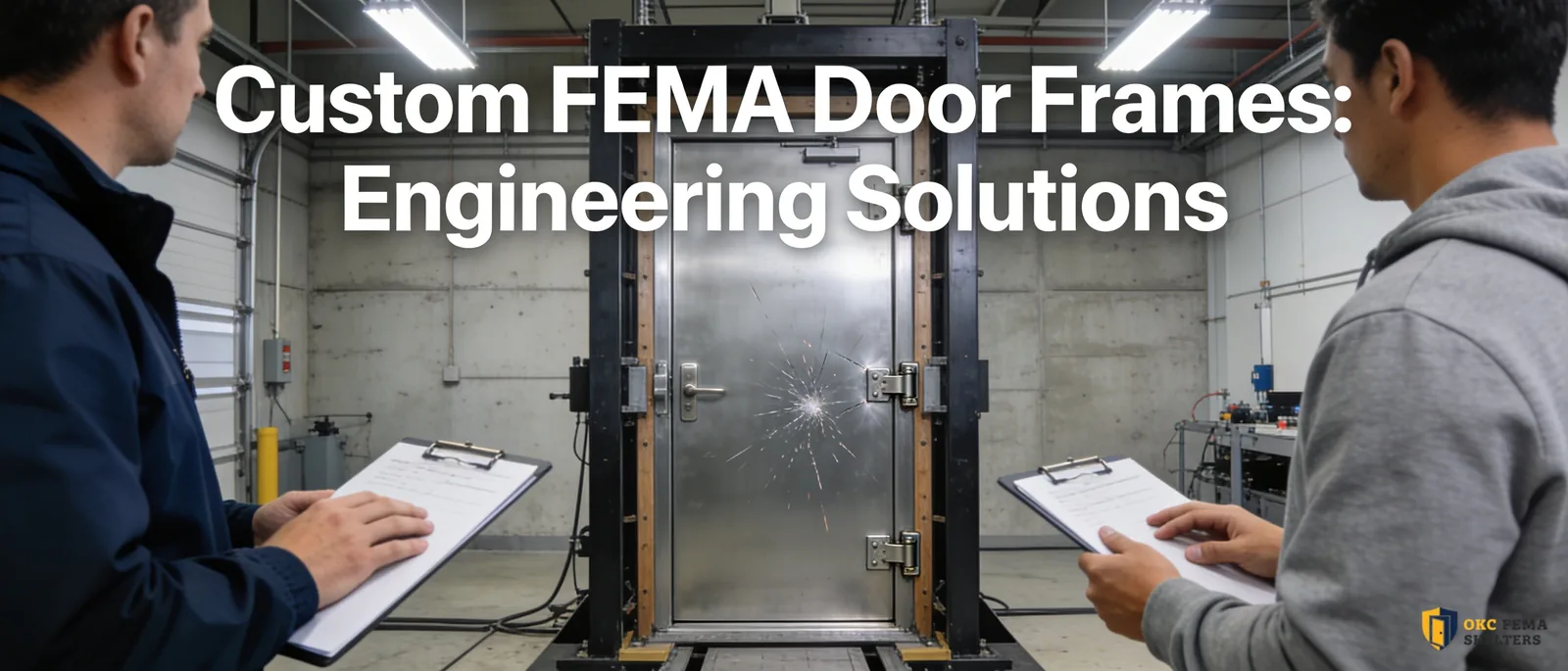
Custom FEMA Door Frames: Engineering Solutions
Custom engineered FEMA door frames provide code-compliant tornado. Hurricane protection built to FEMA 320/361 and ICC 500 standards, withstanding wind speeds up to 250 mph. OKC FEMA Shelters designs and fabricates every steel frame in-house, ensuring precision tolerances. Structural integrity for architects, contractors, and procurement teams specifying new construction or retrofit safe room projects nationwide. cite-1
Key Takeaways
Steel doors pass FEMA 361 and ICC 5 standards for tornado resistance, unlike standard doors.
Over 1,000 tornadoes strike the United States annually, destroying conventional door assemblies regularly.
OKC FEMA Shelters provides custom engineered steel door frames designed for windstorm and hurricane protection.
Steelcraft steel doors represent the only readily available material meeting federal storm shelter requirements.
Steel doors pass FEMA 361 and ICC 5 standards for tornado resistance, unlike standard doors.
Over 1,000 tornadoes strike the United States annually, destroying conventional door assemblies regularly.
OKC FEMA Shelters provides custom engineered steel door frames designed for windstorm and hurricane protection.
Steelcraft steel doors represent the only readily available material meeting federal storm shelter requirements.
Why Won’t a Standard Steel Door Pass FEMA Testing?
Off-the-shelf steel doors fail FEMA testing because their frames, hinges, and latching hardware were never engineered as a unified assembly. Standard commercial doors buckle under wind-borne debris impact. Pressure loads that a compliant engineered door frame must resist without deformation. Detailed in the High-Security FEMA Steel Door Installation Guide. Only steel construction has passed FEMA 361 and ICC 500 tornado testing at wind speeds up to 250 mph. No wood door, even reinforced with metal sheathing, has ever passed FEMA P-361 certification.
Can builders swap in generic hardware to save cost?
No. Certified tornado assemblies are tested and approved as a complete unit. Frame, door leaf, hinges, anchors, and latching hardware together. Substituting an unapproved hinge or anchor voids the assembly’s certification, regardless of how the door itself performs alone.
This is where custom fema door frame fabrication matters for procurement teams. A frame built to match a specific opening, wall assembly, and anchoring condition performs differently than a mass-produced kit forced into a project it wasn’t designed for.
OKC FEMA Shelters addresses this through in-house steel door fabrication, rather than reselling generic kits. Building every frame and shelter under one roof preserves structural integrity across the entire assembly:
Consistent tolerances between frame and door leaf
Verified hinge and anchor compatibility
Documented compliance for inspection and procurement records
Consistent tolerances between frame and door leaf
Verified hinge and anchor compatibility
Documented compliance for inspection and procurement records
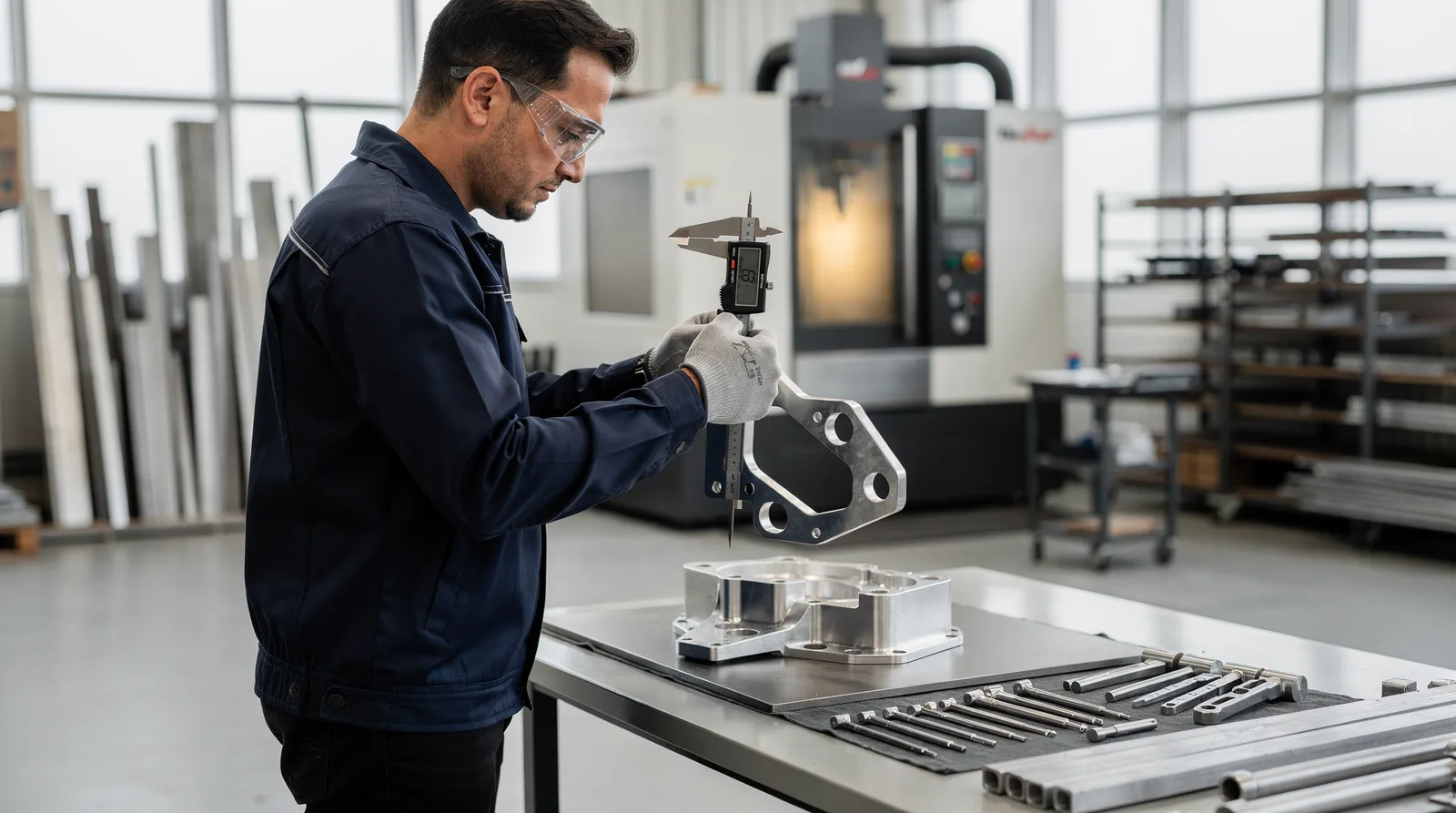
How Does In-House Fabrication Ensure Fit and Compliance?
In-house fabrication closes the gap between engineering drawings and finished hardware that actually meets code on installation day. OKC FEMA Shelters designs and manufactures the security systems that protect a structure directly, building custom FEMA door frame assemblies and anchoring systems rather than assembling pre-manufactured enclosures purchased from third parties. cite-3 That distinction matters for procurement teams comparing bids: a vendor that only installs kits has no control over tolerances baked into someone else’s production line.
Control over fabrication gives architects and contractors something harder to find than a low bid: repeatability. Developers, architects, and contractors rely on this approach because it delivers verifiable performance and consistent manufacturing quality across multi-building or multi-phase projects. A door frame specified for one wing of a school should perform identically in the next.
What makes a door frame “engineered” rather than simply installed?
An engineered door frame is built to documented specifications, then fitted through a controlled process rather than field-adjusted on-site. Every FEMA door frame moves from custom fabrication to professional on-site installation](https://okcfemashelters. [cite-1com/professional-fema-door-installation-steps/) under one continuous chain of accountability.
Can FEMA-rated doors fit existing openings?
Yes. Steel door fabrication allows FEMA-compliant units to be custom-built for existing frames, complete with multi-point locking systems and professional installation. cite-1 This matters for retrofit projects, where opening dimensions rarely match new-construction standards.
Key advantages of controlling fabrication in-house include:
Precision-matched tolerances between door and frame
Consistent hardware performance across multiple units
Direct accountability from design through final inspection
Precision-matched tolerances between door and frame
Consistent hardware performance across multiple units
Direct accountability from design through final inspection
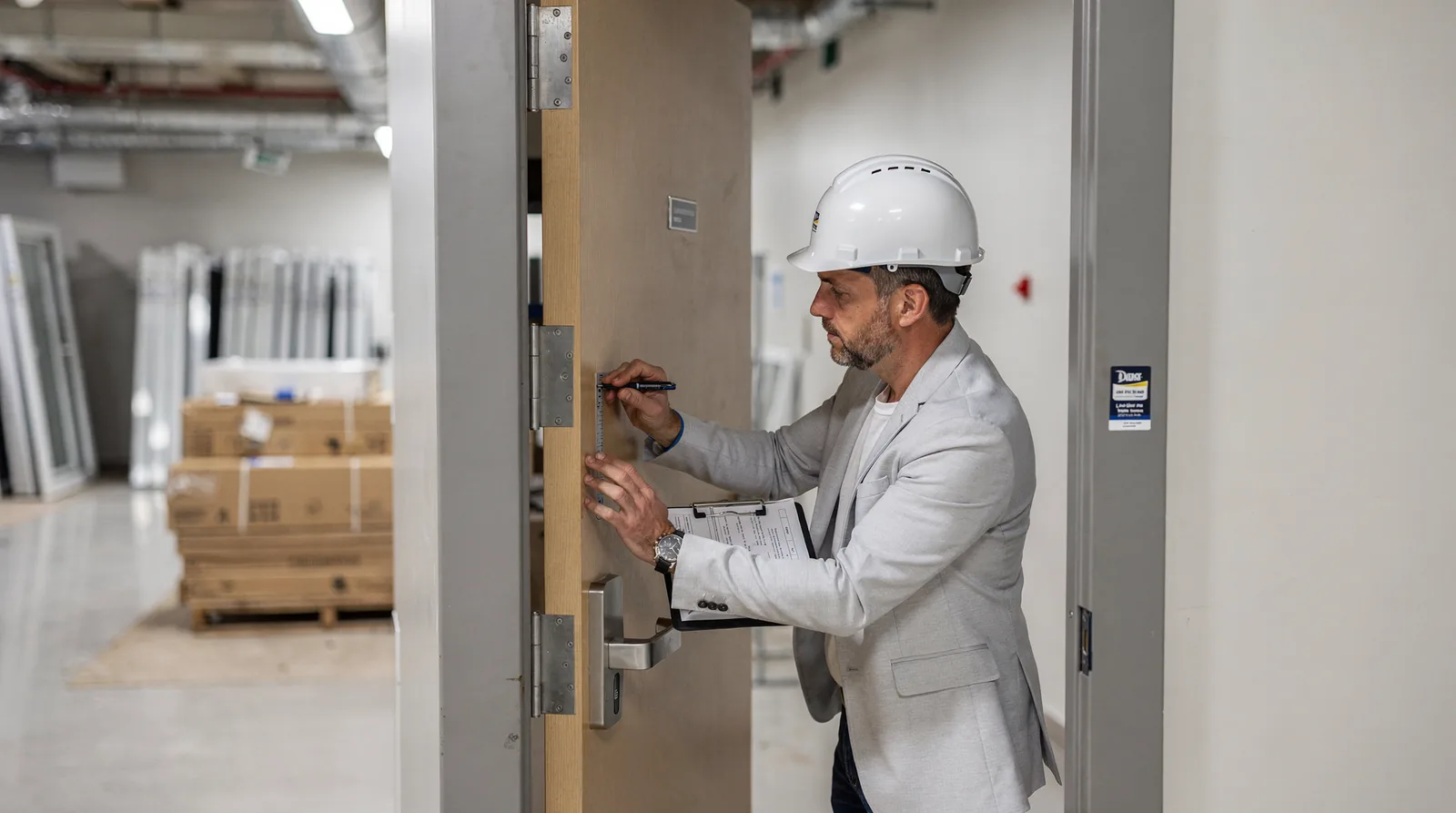
What Should Specifiers Confirm Before Sourcing a Door Assembly?
Specifiers should confirm manufacturing origin, testing documentation, and installation integration before signing off on any door assembly, guidance also outlined in ADA-Accessible FEMA-Compliant Door Solutions. Appearance alone tells procurement teams nothing. Tornado door assemblies look similar to standard steel doors. They are highly engineered products, and heavy-gauge standard steel doors cannot substitute for them despite the resemblance.
That distinction matters most during bid review, when lower-priced alternatives can slip through without proper certification. A custom fema door frame built for a specific opening carries different structural demands than a stock unit resized in the field.
Who manufactures the door assembly matters — why?
Sourcing from a firm that both engineers and fabricates the product reduces risk of mismatched tolerances between door, frame, and anchoring hardware. OKC FEMA Shelters, based in Oklahoma City, Oklahoma, operates as a U.S.-based engineering and manufacturing firm producing custom FEMA-rated door systems and integrated safe room solutions for commercial and multi-family developments. cite-3
Procurement teams should verify three items before approving a supplier:
Confirmation that the engineered door frame integrates directly into new construction or retrofit anchoring systems.
Evidence of in-house steel door fabrication rather than resold third-party kits.
Documentation tying the assembly to the specific project’s structural conditions, not a generic catalog listing.
Confirmation that the engineered door frame integrates directly into new construction or retrofit anchoring systems.
Evidence of in-house steel door fabrication rather than resold third-party kits.
Documentation tying the assembly to the specific project’s structural conditions, not a generic catalog listing.
Custom engineered FEMA door frames represent a critical investment in structural integrity and life safety. OKC FEMA Shelters delivers precision-fabricated assemblies that meet rigorous compliance standards while maintaining the durability required for generational protection. By controlling every stage of manufacturing. Installation in-house, the company ensures that each frame performs as engineered—transforming shelter design from concept into verified, reliable infrastructure that safeguards families and communities when it matters most.
FAQ
Why does a standard steel door fail FEMA testing?
Standard doors buckle under wind-borne debris impact and pressure loads because their frames, hinges, and hardware were never engineered as a unified assembly. Only steel construction has passed FEMA 361 and ICC 500 testing at wind speeds up to 250 mph.
Can generic hardware replace certified components in a tornado door assembly?
No. Certified assemblies are tested as a complete unit. Substituting an unapproved hinge or anchor voids the assembly’s certification regardless of the door’s individual performance.
Why does OKC FEMA Shelters fabricate frames in-house instead of using third-party kits?
In-house fabrication ensures consistent tolerances between frame and door leaf, verified hinge and anchor compatibility, and documented compliance, giving architects and contractors repeatable performance across multi-building projects.